


Sept 30, 2025 3-5pm ET
Tuesday on The Robert Scott Bell Show:

Hour 1
 ‘Watershed Moment’: RFK Jr. Rejects UN Health Goals, Says They ‘Ignore’ Global Rise in Chronic Disease In a U.N. address, Health Secretary Robert F. Kennedy Jr. formally rejected the U.N. noncommunicable disease (NCD) declaration, arguing that its targets are weak and ignore the central role of ultraprocessed food, corporate influence, and chemical exposures in driving the global rise in chronic disease. He stated that chronic disease has more than doubled in a single generation and that millions of children lose years of healthy life before adulthood. Kennedy framed the declaration’s provisions—ranging from taxes to public health mandates—as overreach by international bodies that would erode national sovereignty and enable “oppressive management” of health policy. He criticized the U.N. and WHO for lacking credibility, asserting that these institutions exceed their proper role, neglect root causes, and bypass democratic accountability. His move forces the proposal to face a vote in the U.N. General Assembly rather than pass by consensus. Supporters, including wellness advocates, praised the stance as a defense of national sovereignty and health autonomy, accusing the declaration of being a “Trojan horse” that hides global control mechanisms under humanitarian language. Critics argue the rejection complicates global cooperation on chronic disease and public health goals, as the declaration aimed to reduce rates of tobacco use, hypertension, and improve mental healthcare access by 2030. The article positions the decision as part of Kennedy’s broader MAHA (Make America Healthy Again) agenda, aligning domestic health policy with challenges to global institutions and emphasizing food policy and industrial accountability over technocratic solutions.

 Millions of Tons of COVID Face Masks Releasing Toxic Chemicals, Microplastics into the Environment The article highlights findings from a peer-reviewed study in Environmental Pollution showing that billions of discarded COVID-era face masks are contributing to a global ecological hazard by releasing microplastics and toxic chemicals. During the height of the pandemic, more than 129 billion masks were thrown away each month, generating an estimated 4.3 million tons of contaminated plastic waste in just one year, much of which entered oceans, rivers, and soil. Laboratory analysis revealed that even new, unused masks leached hazardous substances when soaked in purified water for only 24 hours. FFP2 and FFP3 masks released up to four times more microplastics than standard surgical masks, while also emitting endocrine-disrupting chemicals such as bisphenol A, which has been associated with reproductive disorders, neurological harm, and developmental issues. Researchers warned that because these masks are non-recyclable and degrade slowly, their accumulation poses a long-term risk to marine ecosystems, wildlife, and human health as chemicals enter food and water supplies. The findings raise questions about the environmental costs of pandemic-era mitigation measures, particularly given the scale of waste created in such a short time. The authors suggest urgent reassessment of mask production materials, stronger regulation of disposal practices, and greater investment in biodegradable alternatives to reduce ongoing harm. The article frames the issue as a significant but overlooked consequence of global pandemic policies, warning that without corrective measures, the environmental and health impacts of discarded masks may persist for decades.
 Republicans Have a MAHA Problem. Democrats See an Opportunity What began as a health-focused movement under the “Make America Healthy Again” (MAHA) banner is putting Republicans in a bind, as disappointed supporters consider defecting and Democrats eye a strategic opening. Many parents and MAHA backers say they were drawn to the movement after Trump and Robert F. Kennedy Jr. promised reforms on pesticides, chemical exposure, and chronic illness. But as the administration’s efforts have stalled, some Republicans have pushed back—especially over a spending-bill rider seen as shielding pesticide companies from liability. That disconnect has drawn ire from MAHA-aligned voters, who argue that Republicans haven’t lived up to health and environmental promises. Polling cited in the article shows that among Republicans aware of MAHA, the movement is viewed positively, and most believe it reflects their values on food and agriculture. Some Democrats are now courting the movement, seeking to co-opt its agenda on brain health, chemical regulation, and food system reform. Representative Chellie Pingree is among those who urge Democrats not to miss this chance. The backlash centers in part on dissatisfaction with the second MAHA commission report, which critics say diluted earlier positions on glyphosate and other toxins to appease industry. Republicans remain tied to food and agricultural sectors, making them less responsive to MAHA demands. Observers argue that Republicans who embrace industry-friendly riders risk alienating MAHA voters in 2026. Meanwhile, anti-pesticide bills such as the Pesticide Injury Accountability Act are being pitched as bipartisan bridges into MAHA circles, though no Republican cosponsors have yet emerged. The article portrays MAHA as a shifting force in U.S. health politics whose alignment could reshape party loyalties.

Welcome back to another “Homeopathic Hits” episode on The Robert Scott Bell Show!
On The Robert Scott Bell Show today, we feature Oleum Animale Aethereum—an old homeopathic remedy prepared from animal oil distilled with bone.
Boericke places it among the remedies with strong action on the nervous system, especially where spasms, hysteria, or convulsions are present.
Download the Information Sheet
Hour 2
 RFK Jr. Is Targeting Vaccines And Tylenol. Are Prozac And Ozempic Next? The article outlines how Health Secretary Robert F. Kennedy Jr. has expanded his longstanding skepticism of pharmaceuticals into federal policy through his Make America Healthy Again initiative, with targets that now extend well beyond vaccines and Tylenol. Kennedy has already fueled controversy by promoting unsupported claims that prenatal Tylenol causes autism and making it harder for Americans to access COVID-19 vaccines, but reporters note his agenda also singles out abortion drugs, antidepressants, statins, and popular GLP-1 medications such as Ozempic and Wegovy. He and FDA Commissioner Marty Makary recently notified Republican attorneys general that the FDA was reviewing the abortion pill mifepristone, which could curtail access to two-thirds of U.S. medical abortions. During his confirmation hearings, Kennedy claimed—without evidence—that serotonin-based antidepressants are harder to stop using than heroin and contribute to school shootings, sparking concern for the 11% of Americans relying on them for mental health conditions. He has also questioned the safety and necessity of statins despite decades of research showing they lower heart disease risk, and his allies at Children’s Health Defense have dismissed them as overprescribed. The article notes that Kennedy has criticized GLP-1 drugs both for their high cost and alleged risks, while incorrectly claiming Ozempic is not marketed in Europe. Earlier this year, he blocked Medicare coverage of GLP-1s for obesity, a decision that denied potential access for an estimated seven million Americans. Critics argue that Kennedy’s pattern of elevating disputed claims and restricting coverage could reshape drug policy for tens of millions, raising alarms about both access to care and the politicization of medical science.
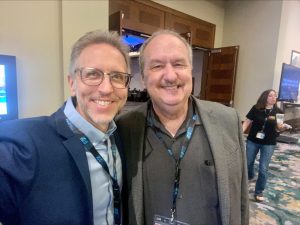 Special Guest: Brian Hooker
Brian S. Hooker, PhD, PE, is an Associate Professor of Biology at Simpson University in Redding, California, where he specializes in chemistry and biology coursework. Additionally, Hooker is the Senior Process Consultant at ARES Corporation, working closely on process design for the environment restoration industry. His design efforts focus on industrial biotechnology and chemical engineering principles.
Brian dedicated over 15 years as a bioengineer and the team leader for the High Throughput Biology Team and Operations Manager of the DOE Genomics: Genomes to Life (GTL) Center for Molecular and Cellular Systems at the Pacific Northwest National Laboratory (PNNL). Dr. Hooker managed applied plant and fungal molecular biology research projects at the Pacific Northwest National Laboratory, where systems biology researchers are focused on understanding gene and protein networks involved in individual cell signaling, communication between cells in communities, and cellular metabolic pathways.
In 1985, Dr. Hooker earned his Bachelor of Science degree in chemical engineering, from California State Polytechnic University, Pomona, California. He earned his Masters of Science degree in 1988 and his doctorate in 1990, both in biochemical engineering, from Washington State University, in Pullman, Washington.
Brian Hooker has many accomplishments to his credit including: co-inventor for five patents, recipient of the Battelle Entrepreneurial Award in 2001, and a Federal Laboratory Consortium Recognition Award in 1999, for his work on “Reactive Transport in 3-Dimensions.” The breadth of Hooker’s 60 science and engineering papers have been published in internationally recognized, peer reviewed journals.
He has a teenage son with autism and has been active in the autism community since 2002.

 Marijuana Stocks Jump on Trump’s “Revolutionize Senior Healthcare” Video The article reports that cannabis stocks experienced a major rally after former President Trump released a video on Truth Social promoting hemp-derived CBD as a breakthrough in senior healthcare. In the nearly three-minute video, CBD was described as a natural solution capable of relieving pain, reducing inflammation, improving sleep, lowering stress, and even slowing the progression of disease by restoring the endocannabinoid system. It framed Medicare coverage of CBD as the most important senior health initiative of the century, emphasizing the need to move away from addictive pharmaceuticals. The market responded quickly, with the Advisor Shares Pure US Cannabis ETF (MSOS) surging 21% in premarket trading and more than 1.5 million shares changing hands early in the day. Other cannabis-related stocks also posted double-digit gains, reflecting investor optimism that regulatory changes may soon favor the industry. The article highlights speculation that the administration could reclassify marijuana from Schedule I to Schedule III under federal law, a move that would ease restrictions on research, taxation, and medical access. Analysts noted that Trump’s video amplified public awareness of CBD’s potential at a time when Congress remains divided over broader cannabis reforms, giving the appearance of executive momentum. Supporters hailed the announcement as validation for the cannabis sector, particularly as older Americans represent a key market segment. Critics, however, questioned the scientific evidence behind some of the claims made in the video, warning that hype could overshadow the need for rigorous clinical validation. Overall, the piece frames the event as both a market-moving moment and a political signal of shifting attitudes toward cannabis policy.
 Parents Now Book ‘Appointments’ With Kids For Quality Time As Digital Life Takes Priority Nearly half of surveyed parents say they now schedule formal “appointments” with their children for quality time, reflecting a growing struggle to maintain meaningful connection amid heavy digital and social distractions. The survey revealed that constant use of smartphones and other devices often crowds out organic interaction, prompting parents to carve out structured time to intentionally engage—whether through board games, reading, meals, or conversation. Many respondents described feelings of guilt or regret over missed opportunities to connect authentically, attributing them to work obligations, digital overload, and competing demands. The phenomenon suggests that spontaneous family moments have diminished, necessitating calendar entries just to ensure relational touchpoints. The article points out that although such scheduling may seem artificial, parents see it as a tool for accountability—helping reduce screen time and create a buffer against passive digital consumption. Critics, however, warn that formalizing quality time risks making emotional bonds feel transactional or pressured rather than natural. Some psychologists argue that the ubiquity of screens has altered attention spans and relational rhythms, so structured time becomes a compensatory mechanism. Still, many families say these appointments are restoring a sense of presence, intentionality, and connection that had slipped away. The piece frames the trend as emblematic of a digital era where attention itself becomes the scarce resource, and where families must negotiate technology’s intrusion to preserve intimacy.
Remember Friends, The Power to Heal is Yours!
