


Apr 10, 2025 3-5pm ET
Thursday on The Robert Scott Bell Show:

Hour 1
 Special Guest: Jonathan Emord
For the past 37 years, Jonathan W. Emord has litigated against the federal bureaucracy, winning over and over again. Ron Paul calls Jonathan “an expert in constitutional theory and history” and “an expert litigator with a long string of legal victories over the federal bureaucracy.” George Noory calls him “a Knight in Shining Armor” and “a warrior out to save our rights.” Congressmen Dan Burton and John Doolittle describe him as “an intellectual warrior for the rights and freedoms of people in America.” Jonathan has a unique, detailed knowledge of the federal bureaucracy, the deep state. He knows how to defeat it. Jonathan graduated from the University of Illinois (BA, political science and history, 1982) and DePaul University College of Law (JD, 1985). He served as an attorney in the Federal Communications Commission during the Reagan administration. A leading constitutional law and litigation expert, he is the author of five critically acclaimed books. He has won more cases against the Food and Drug Administration in federal court than any other attorney in American history, earning him the nickname “FDA Dragon Slayer.” He is a columnist for Townhall.com, PJ Media.com, Americangreatness.com, and the U.S.A. Today Magazine. He frequently appears on national radio and television programs. He is married to Sheryl Emord, and they have two children, twins Justice and Angelica. They reside in Clifton, Virginia.
 The FCC Must Prioritize Public Health Over Telecom Profits The Federal Communications Commission (FCC) has been criticized for prioritizing the interests of the telecommunications industry over public health by maintaining outdated safety standards for wireless radiation exposure. Despite increasing scientific evidence linking radiofrequency (RF) radiation to serious health issues such as cancer and neurological disorders, the FCC continues to rely heavily on industry-funded research and self-reported data. Current testing protocols fail to account for the increased vulnerability of children to RF radiation. Furthermore, the FCC has resisted calls for independent testing and greater transparency. Federal actions and proposed legislation have also undermined local governments’ authority to regulate the deployment of 5G infrastructure. Advocates are calling for updated safety guidelines, increased accountability, and a moratorium on 5G expansion until independent research can confirm its safety.
 Health Secretary RFK Jr. Endorses the MMR Vaccine — Stoking Fury Among His Supporters Health and Human Services Secretary Robert F. Kennedy Jr., previously known for his vaccine skepticism, publicly endorsed the measles, mumps, and rubella (MMR) vaccine amid a significant measles outbreak in Texas. In a social media post, Kennedy stated that the MMR vaccine is the most effective way to prevent the spread of measles and mentioned his directive for the Centers for Disease Control and Prevention to supply Texas clinics with MMR vaccines and other medical supplies. This endorsement followed meetings with families of two children who died from measles in Texas. Kennedy’s shift aligns with scientific consensus on the vaccine’s efficacy but has provoked backlash from anti-vaccine activists who previously supported him. They expressed anger and accused him of betraying their cause. Medical experts welcomed his endorsement, emphasizing the vaccine’s role in preventing measles spread. As of early April, Texas reported 481 measles cases, predominantly among unvaccinated individuals, with three deaths linked to the outbreak.
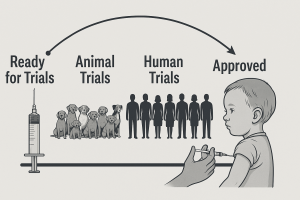 Senators’ Silence on the FDA’s Failures During the confirmation hearing of Dr. Marty Makary for the position of FDA Commissioner, senators notably avoided addressing the agency’s recent significant failures. Despite Makary’s impressive credentials and promises to enhance transparency and restore public trust, critical issues remained unexamined. One major concern is the FDA’s increasing reliance on expedited drug approval pathways, with 65% of new drugs being approved through these faster routes. This trend has been linked to greater safety risks and a higher likelihood of requiring black box warnings. The approval of Aducanumab, an Alzheimer’s drug, exemplifies this problem, as it was approved based on surrogate markers rather than meaningful clinical outcomes, despite an almost unanimous vote against its approval by the FDA’s advisory committee. Additionally, the FDA has been criticized for its lack of transparency, particularly in its refusal to release patient-level data from clinical trials, hindering independent verification of drug efficacy and safety. The agency’s close financial ties to the pharmaceutical industry, with 75% of its drug regulatory budget funded by industry user fees, raise concerns about potential conflicts of interest. The failure to address these issues during Makary’s confirmation hearing suggests a lack of accountability and a missed opportunity to scrutinize the FDA’s practices.
 How Big Pharma Weaves Its Web The pharmaceutical industry has constructed an intricate and self-reinforcing system that influences various aspects of healthcare, including clinical trial design, regulatory approval, medical education, and the control of medical journals. This extensive network ensures that doctors, patients, and even regulators become ensnared in a cycle of pharmaceutical dependence. The industry’s influence extends to silencing dissenting voices and shaping public perception, often prioritizing profit over patient safety. The author, drawing from personal experience following the tragic loss of a loved one to an antidepressant, highlights the lack of transparency and accountability within the system. Despite engaging with regulators, testifying before the FDA and Congress, and participating in global conferences, the author emphasizes that the healthcare system operates more like a business focused on profit rather than prioritizing health. This pervasive influence of Big Pharma underscores the need for systemic reform to prioritize patient well-being and ensure that healthcare decisions are guided by unbiased and rigorous scientific evidence
Hour 2
 Another Texas Child Dies after Recovering from Measles A licensed Texas physician reports the death of a chronically ill child who had previously recovered from measles. The young girl had been suffering from chronic tonsillitis and mononucleosis, conditions unrelated to her prior measles infection. Her parents were arranging for a tonsillectomy when she developed sepsis, a bacterial blood infection, leading to her death. The physician emphasizes that this case, like a recent similar incident, involves a child with pre-existing conditions whose death was inaccurately attributed primarily to measles. The article highlights concerns about misdiagnosis and potential improper medical management, suggesting that attributing such deaths directly to measles without considering underlying health issues may be misleading. The physician calls for accurate reporting and a comprehensive understanding of individual health circumstances in such cases.
 Special Guest: Sofia Karstens
Sofia Karstens is an activist in California who worked closely with publisher Tony Lyons and Robert F. Kennedy Jr on several projects including Kennedy’s best selling book: The Real Anthony Fauci. She collaborates with several organizations in the legal, legislative, medical science, and literary spaces and she is co-founder of Free Now Foundation, a non-profit preserving medical freedom and children’s health. She was the creator and host of the Patriot Network news show 4th Branch, taking the show from its inception through 45 episodes. She was the founder and treasurer of the Common Sense SuperPAC which supported Robert Kennedy’s bid for President, and is founder and current treasurer of the Decentralize America PAC, supporting common sense candidates in both state and federal elections who focus on winding back corporate capture and corruption at all levels of government. She is also founder of Decentralize America non profit (501c4) working on legislative and judicial initiatives in California to lay strategic infrastructure for the course correct n the state.

 Yes, Bobby Kennedy Is Crazy – But Not In The Way You Think. This guest editorial by Sofia Karstens asserts that the U.S. government is dysfunctional and requires a bold, unconventional leader like Robert F. Kennedy Jr. to initiate meaningful change. Karstens emphasizes the necessity of strategic decision-making in political appointments, highlighting challenges posed by figures such as Senator Cassidy, who has the authority to obstruct key nominations. She argues that Kennedy must navigate these political obstacles carefully to avoid jeopardizing his ability to implement reforms. The article criticizes premature judgments and internal conflicts among supporters, suggesting that such actions undermine collective efforts for reform. Karstens calls for active support and strategic collaboration from the public to assist Kennedy in overcoming entrenched political forces. She underscores the importance of collective responsibility, urging individuals to contribute proactively rather than relying solely on Kennedy. The editorial concludes by encouraging readers to provide Kennedy with the necessary backing to address systemic issues effectively.
 Bobby’s 2nd Statement on Texas Measles Cases This article discusses Robert F. Kennedy Jr.’s second statement regarding recent measles cases in Texas. Kennedy clarifies that in early March, he deployed a CDC team to support local and state responses across multiple Texas regions, ensuring that pharmacies and healthcare providers were adequately supplied with vaccines and resources. He emphasizes the importance of vaccination in preventing measles outbreaks and addresses concerns from his supporters about his stance on the MMR vaccine. Kennedy reiterates his commitment to public health and the necessity of balancing individual freedoms with community well-being. He acknowledges the complexities surrounding vaccine discussions and aims to foster a more informed and respectful dialogue on the topic. The statement reflects Kennedy’s efforts to navigate the contentious landscape of vaccination policies while maintaining transparency and public trust.
Question of The Day!
CRPS treatments or alternative cures? A friend asking for help… thanks so much!
God Bless you and super Don!
Chad

Welcome back to another “Homeopathic Hits” episode on The Robert Scott Bell Show!
Today, we’re featuring Anthrakokali, a distinctive homeopathic remedy known for its ability to address chronic skin conditions, rheumatic discomfort, and digestive disturbances.
If you’re struggling with itching, cracked skin, joint pain, or digestive upset, this coal-derived remedy may offer natural relief.
Download the Information Sheet
Remember Friends, The Power to Heal is Yours!
