


June 23, 2026 3-5pm ET
Tuesday on The Robert Scott Bell Show:


Hour 1
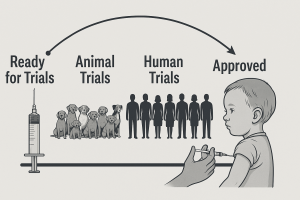 FDA Launches ‘Operation TrialBlazer’ to Fast-Track Experimental Drugs The Food and Drug Administration has announced a sweeping new initiative called “Operation TrialBlazer” aimed at speeding experimental drugs from the laboratory into human testing and ultimately toward approval by cutting development timelines, reducing information requirements, relying less on traditional animal testing, and accelerating the path to market across the entire drug-development pipeline from the Investigational New Drug phase to late-stage pivotal trials. The agency describes existing requirements, timelines, and testing practices as obstacles that slow products down and proposes an Expedited IND pilot program to shorten the time from drug identification to first-in-human study while encouraging companies to submit only the data that is needed at each step, potentially saving 6 to 12 months of development time. The initiative also revises guidance to clarify circumstances in which drug developers may rely on one rigorous pivotal clinical investigation plus confirmatory evidence to demonstrate substantial evidence of effectiveness, aiming to reduce duplicative infrastructure and streamline data collection. The move comes shortly after the FDA’s Vaccines and Related Biological Products Advisory Committee voted unanimously that the benefits of Moderna’s experimental mRNA influenza vaccine outweigh its risks, despite the shot producing roughly six times more severe reactions than standard flu vaccines while providing less than 1% absolute risk reduction. Members of Congress have warned that the FDA is failing to meet important federal safety requirements, raising questions about why the agency is simultaneously accelerating drugs through the pipeline while facing accusations of inadequate safety oversight. Critics view the announcement as a government-led effort to move experimental products faster rather than a tightening of standards, especially for Americans who already believe drugs reach the market too quickly without adequate long-term safety evaluation. The FDA states the purpose is to accelerate and modernize clinical research, but the language repeatedly emphasizes shortening, reducing, streamlining, and saving time throughout the process.
 Special Guest: William Parker
William Parker earned a PhD in Chemistry in 1992, and studied biochemistry, microbiology and immunology at Duke University for almost 30 years before starting WPLab, a private, non-profit research and education corporation in 2021. Best known for the discovery of the function of the human vermiform appendix (a safe-house for bacteria), William has spent almost a decade studying the impact of acetaminophen combined with oxidative stress on neurodevelopment. He now has work published in PLoSOne, the European Journal of Pediatrics, Minerva Pediatrics, Clinical and Experimental Pediatrics, and other peer reviewed journals evaluating the role of acetaminophen in the induction of autism. WPLab scientists have concluded that many if not most cases of autism are a chemically induced injury caused by exposure of susceptible babies and children to acetaminophen. William has published 150 peer reviewed papers, and his work now includes education and outreach regarding the risks of acetaminophen exposure during neurodevelopment.


Welcome back to another “Homeopathic Hits” episode on The Robert Scott Bell Show!
Today’s Homeopathic Hit is Gentiana lutea, commonly known as Yellow Gentian.
Boericke highlights this remedy for marked stomach symptoms, including acid rising, ravenous hunger, nausea, weight and aching in the stomach, abdominal inflation, colic, and flatulence. It is also described as a tonic that increases appetite.
Download the Information Sheet
Hour 2
 FDA Altered Autopsy Results of Children Who Died After COVID Vaccines The Food and Drug Administration has been accused of altering autopsy reports and death certificates of children who died shortly after receiving COVID-19 vaccines, with internal documents and whistleblower accounts suggesting officials changed causes of death from vaccine-related cardiac events or myocarditis to unrelated conditions such as pneumonia or natural causes in order to downplay safety signals and protect the vaccination program’s public image. Children’s Health Defense reviewed multiple cases where original autopsy findings clearly linked mRNA-induced myocarditis, pericarditis, or spike protein-related damage to the deaths of healthy children and adolescents, yet subsequent official records omitted or reclassified these findings after FDA or CDC involvement, raising serious questions about data integrity, transparency, and potential cover-up at the highest levels of public health agencies. The pattern mirrors earlier controversies over VAERS underreporting, delayed safety signal recognition, and pressure on pathologists to avoid listing vaccines as contributing factors, with critics arguing that such alterations have prevented accurate assessment of vaccine risks in young populations where baseline COVID mortality was extremely low. Medical examiners and families involved described being told to revise reports to align with national narratives emphasizing vaccine safety, while independent pathologists reviewing the same tissues confirmed vaccine-associated pathology including lymphocytic infiltration and spike protein presence in cardiac tissue. The revelations come amid broader scrutiny of FDA and CDC handling of pediatric vaccine safety data, including the recent push for expanded mRNA flu shots in children despite modest efficacy and acknowledged risks, further eroding public trust in institutions tasked with protecting the most vulnerable. Health freedom advocates and parents’ groups called for independent forensic audits of all pediatric deaths temporally associated with vaccination, full release of unredacted autopsy records, and immediate suspension of recommendations for healthy children until comprehensive, conflict-free investigations are completed. The FDA has not publicly responded to the specific allegations, maintaining that all reported deaths are thoroughly investigated and that vaccines undergo rigorous safety monitoring, while continuing to recommend the shots for children despite growing calls for individualized risk assessment and informed consent.

Special Guest: Brian Hooker
Brian S. Hooker, PhD, PE, is an Associate Professor of Biology at Simpson University in Redding, California, where he specializes in chemistry and biology coursework. Additionally, Hooker is the Senior Process Consultant at ARES Corporation, working closely on process design for the environment restoration industry. His design efforts focus on industrial biotechnology and chemical engineering principles.
Brian dedicated over 15 years as a bioengineer and the team leader for the High Throughput Biology Team and Operations Manager of the DOE Genomics: Genomes to Life (GTL) Center for Molecular and Cellular Systems at the Pacific Northwest National Laboratory (PNNL). Dr. Hooker managed applied plant and fungal molecular biology research projects at the Pacific Northwest National Laboratory, where systems biology researchers are focused on understanding gene and protein networks involved in individual cell signaling, communication between cells in communities, and cellular metabolic pathways.
In 1985, Dr. Hooker earned his Bachelor of Science degree in chemical engineering, from California State Polytechnic University, Pomona, California. He earned his Masters of Science degree in 1988 and his doctorate in 1990, both in biochemical engineering, from Washington State University, in Pullman, Washington.
Brian Hooker has many accomplishments to his credit including: co-inventor for five patents, recipient of the Battelle Entrepreneurial Award in 2001, and a Federal Laboratory Consortium Recognition Award in 1999, for his work on “Reactive Transport in 3-Dimensions.” The breadth of Hooker’s 60 science and engineering papers have been published in internationally recognized, peer reviewed journals.
He has a teenage son with autism and has been active in the autism community since 2002.


 Americans Taking More Supplements But Fewer Multivitamins, Study Finds A new analysis of national dietary supplement use reveals that while overall supplement consumption among American adults remains high, the popularity of traditional multivitamins has declined significantly in recent years as consumers shift toward more targeted, single-nutrient or condition-specific supplements such as vitamin D, omega-3 fatty acids, probiotics, magnesium, and turmeric, reflecting greater awareness of personalized nutrition, concerns about nutrient interactions in multis, and a preference for addressing specific health goals rather than taking a broad-spectrum approach. Data from large-scale surveys including the National Health and Nutrition Examination Survey show that while approximately 60 percent of adults continue using some form of dietary supplement, the percentage regularly taking multivitamins has dropped notably since the early 2000s, with many opting instead for individual vitamins, minerals, herbs, or functional blends tailored to immune support, heart health, joint mobility, sleep, or cognitive function. Researchers attribute the shift to increased availability of information through online sources, influencer recommendations, and functional medicine practitioners who emphasize testing for deficiencies and matching supplements to individual biochemistry rather than blanket formulations that may contain unnecessary or poorly absorbed ingredients. Experts note that while multivitamins can still serve as convenient nutritional insurance for those with poor diets, many consumers now view them as less effective or potentially imbalanced compared to focused supplementation supported by blood work or specific wellness objectives. The trend aligns with broader movements toward precision nutrition and root-cause approaches to health, as consumers seek greater control over their supplement regimens amid rising interest in preventive wellness and skepticism toward one-size-fits-all products. Nutritionists caution that while targeted supplementation can be beneficial when addressing documented deficiencies, self-directed use without guidance may lead to imbalances or unnecessary expense, recommending professional consultation for optimal results. The changing landscape of supplement preferences highlights evolving consumer behavior in the wellness industry, with market data showing strong growth in single-ingredient and condition-specific categories even as overall multivitamin sales stagnate or decline.

Remember Friends, The Power to Heal is Yours!
