


Aug 1, 2025 3-5pm ET
Friday on The Robert Scott Bell Show:

Hour 1
Special Guest – Brian Hooker PhD,PE
 Brian S. Hooker, PhD, PE, is an Associate Professor of Biology at Simpson University in Redding, California, where he specializes in chemistry and biology coursework. Additionally, Hooker is the Senior Process Consultant at ARES Corporation, working closely on process design for the environment restoration industry. His design efforts focus on industrial biotechnology and chemical engineering principles.
Brian dedicated over 15 years as a bioengineer and the team leader for the High Throughput Biology Team and Operations Manager of the DOE Genomics: Genomes to Life (GTL) Center for Molecular and Cellular Systems at the Pacific Northwest National Laboratory (PNNL). Dr. Hooker managed applied plant and fungal molecular biology research projects at the Pacific Northwest National Laboratory, where systems biology researchers are focused on understanding gene and protein networks involved in individual cell signaling, communication between cells in communities, and cellular metabolic pathways.
In 1985, Dr. Hooker earned his Bachelor of Science degree in chemical engineering, from California State Polytechnic University, Pomona, California. He earned his Masters of Science degree in 1988 and his doctorate in 1990, both in biochemical engineering, from Washington State University, in Pullman, Washington.
Brian Hooker has many accomplishments to his credit including: co-inventor for five patents, recipient of the Battelle Entrepreneurial Award in 2001, and a Federal Laboratory Consortium Recognition Award in 1999, for his work on “Reactive Transport in 3-Dimensions.” The breadth of Hooker’s 60 science and engineering papers have been published in internationally recognized, peer reviewed journals.
He has a teenage son with autism and has been active in the autism community since 2002.
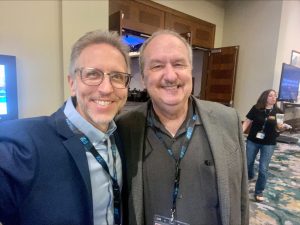 In this interview, I spoke with Dr. Brian Hooker about his work analyzing vaccine safety, the flaws in recent scientific studies, and the actions being taken by Secretary Robert F. Kennedy Jr. at the Department of Health and Human Services. Brian has been an important voice in vaccine safety due to his background as a scientist and as a parent of a vaccine-injured child. We discussed how his personal experience has driven his commitment to challenging the status quo of immunization practices and medical oversight.
A major focus of our discussion was a recent Danish study that claimed aluminum in vaccines is safe. Brian explained that the study was flawed. It excluded data from children diagnosed with autism before the age of two, lacked a true zero-exposure control group, and featured authors who are affiliated with a Danish vaccine manufacturer. The study’s supplementary data, quietly replaced days after publication, showed a statistically significant link between higher aluminum exposure and autism diagnoses. These key findings were not included in the published abstract or conclusions.
We also talked about Secretary Kennedy’s recent decision to remove 16 members of the ACIP (Advisory Committee on Immunization Practices) due to conflicts of interest and replace them with individuals not financially tied to pharmaceutical companies. This has drawn criticism from members of Congress and mainstream health institutions. Brian emphasized the importance of public pressure and support for this kind of reform, while also noting that Kennedy faces constant opposition and must move strategically.
 Another important point covered was the widespread use of acetaminophen (Tylenol), especially in children following vaccination. Brian explained how this drug can damage the liver and worsen vaccine injury, especially in children with existing issues in detoxification. He shared how his own son was harmed by prolonged use of Tylenol after a round of vaccines, contributing to significant health problems. We agreed that safer alternatives should be used when managing fevers or discomfort.
We closed by highlighting upcoming events where Dr. Hooker will be speaking, including Trinity Live in Indiana, the kickoff event for the North Dakota chapter of Children’s Health Defense, and the Moving Mountains Symposium in Illinois. Brian also described his recent appearance at a Senate subcommittee hearing organized by Senator Ron Johnson, where he shared his family’s story. He stressed the need for accurate, transparent science, and for legislative efforts to eliminate vaccine mandates and restore voluntary medical decision-making.


Hour 2 – Encore
 The Hidden Cost of Convenience: How Modern Food Is Fueling a Silent Liver Epidemic Non-alcoholic fatty liver disease, now officially renamed metabolic dysfunction-associated steatotic liver disease (MASLD), affects up to 100 million Americans and is increasingly seen in children—despite being largely asymptomatic in its early stages. The article attributes this growing epidemic to the widespread consumption of ultra-processed foods (UPFs), which now account for nearly 60% of the American diet. UPFs, engineered for taste and profit with high levels of added sugars, seed oils, sodium, and artificial additives, disrupt metabolic processes and contribute directly to insulin resistance, inflammation, and the accumulation of fat in liver cells. Research shows that adolescents with the highest intake of UPFs are 183% more likely to develop fatty liver disease, and the condition is increasingly being diagnosed in individuals with normal body weight, underscoring the role of diet quality over simple caloric excess. The piece criticizes the food industry for flooding the market with addictive, nutrient-deficient products and notes that billions in federal subsidies for corn, soy, and sugar contribute to the affordability and dominance of UPFs in the food system. Solutions proposed include eliminating subsidies for harmful food ingredients, implementing clearer food labeling, restricting UPF marketing to children, and investing in community nutrition education. On a personal level, the article urges consumers to reduce UPF consumption, prioritize real whole foods, cook meals at home, and support policies that foster access to fresh, nutrient-dense food. It warns that without broad intervention, the rise of MASLD could eclipse other chronic conditions as a leading cause of liver transplants and related mortality, turning poor dietary habits into a silent but devastating public health crisis.
 Special Guest Sheriff Richard Mack
Author, speaker and former Sheriff Richard Mack has served in a wide variety of roles over the course of his nearly twenty year career in law enforcement, which began in Provo, Utah. After 11 years at Provo PD, Mack decided to return to his childhood turf in Arizona and run for Graham County Sheriff. His campaign took off and he was elected in 1988. During his tenure, federal officers informed the sheriffs of the state that they would be required to enforce the so-called “Brady Bill” and run background checks at their expense under the law. In 1994, Mack and six other sheriffs from across the country, challenged the constitutionality of the Brady Bill and ultimately, fought it all the way to the United States Supreme Court, where they won a monumental decision for freedom. Three years later, in a landmark 5-4 split decision based on the Tenth Amendment to the United States Constitution, Mack won his case. He has also been named Elected Official of the Year by the Arizona-New Mexico Coalition of Counties in 1994, received the NRA Law Officer of the Year, inducted into the NRA Hall of Fame, 1995 Cicero Award, Samuel Adams Leadership Award from the Local Sovereignty Coalition, and Gun Owners of America Defender of the Second Amendment Award. He was sheriff for two terms until 1997. Sheriff Mack currently teaches, consults and empowers people around the country and around the world. He started the Constitutional Sheriffs & Peace Officers Association (CSPOA) which educates both citizens as well as sheriffs and other peace officers on the Constitution and their limitations of power, according to the Constitution.


 USDA Poised to Deregulate New GMO Corn: What Could Go Wrong? The USDA’s Animal and Plant Health Inspection Service (APHIS) is preparing to deregulate Bayer’s MON 95379 genetically engineered corn, removing it from regulatory oversight and exempting it from confinement, monitoring, and safety reporting. MON 95379 produces two insecticidal proteins targeting lepidopteran pests but poses significant concerns regarding human health, environmental damage, and contamination of non-GMO crops. Studies on similar genetically engineered (GE) crops, such as Bt corn and glyphosate-resistant varieties, have shown links to liver and kidney toxicity, immune system disturbances, reproductive harm, and organ damage in animals. Additionally, these crops have been associated with soil degradation, insect resistance, and harm to beneficial species such as earthworms and pollinators. The deregulation would allow MON 95379 to bypass even the minimal safety nets currently in place, and although the current EPA permit limits its cultivation to 100 acres per season in Nebraska, Hawaii, and Iowa, gene flow and contamination of organic and non-GMO corn is already a well-documented risk. Critics argue that this move favors corporate interests over public welfare and represents another step in promoting industrial agriculture at the expense of ecological and food system integrity. The article contrasts the USDA’s leniency toward GE crops with its historically strict stance on natural health products, highlighting a regulatory imbalance. Rob Verkerk, PhD, from the Make America Healthy Again think tank, condemned the decision as a step backward, emphasizing the need for a national strategy that supports regenerative agriculture and public health. The piece concludes by urging citizens to oppose the deregulation, framing it as a critical opportunity to push for policies that prioritize health, environmental resilience, and food sovereignty over biotech expansion.
 Exclusive: USDA develops potential plan to vaccinate poultry for bird flu The USDA is crafting a formal strategy to vaccinate poultry—marking a potential policy shift—as nearly 175 million birds, including chickens and turkeys, have been culled since the 2022 H5N1 bird flu outbreak. With devastating impacts on egg and turkey producers, the agency has earmarked up to $100 million for vaccine research and is collaborating with federal, state, and industry stakeholders to finalize the plan by July. However, a key challenge lies in maintaining U.S. poultry exports, as some nations may bar vaccinated flocks over concerns the vaccine could conceal active infections. Industry opinions are mixed: egg and turkey farmers support vaccination, while chicken meat producers warn it risks trade bans, emphasizing their reliance on open export markets. The United Egg Producers has proposed an immunization schedule—initial vaccination at hatch with a booster for chicks and regular flock testing, while still culling infected birds to satisfy trading partners. The USDA has already compensated farmers over $1 billion for losses. The forthcoming plan aims to balance improved domestic biosecurity and economic recovery with international export safeguards, marking a critical juncture in America’s response to the worst poultry-health emergency in its history.
Remember Friends, The Power to Heal is Yours!
